






Consolidating the Digital Stack: An Editorial Guide to Systeme.io
In the evolving landscape of digital entrepreneurship, operational friction rarely stems from a lack of ambition or ingenuity. Instead, it frequently arises from technical fragmentation. For years, the conventional blueprint for launching and expanding an online enterprise required assembling an intricate mosaic of specialized software: one service for web hosting, another for lead capture, a third for automated email delivery, and yet another for hosting curriculum materials and managing transactional checkout flows. While each tool may excel in isolation, the cognitive and operational toll of managing disparate subscriptions, fragile integrations, and fragmented customer data creates an invisible ceiling on momentum.
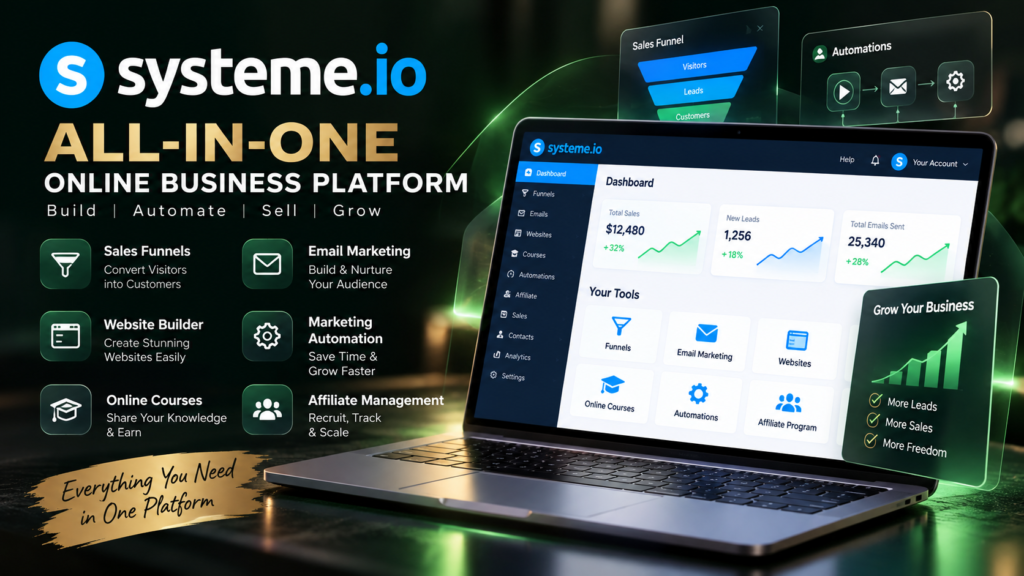
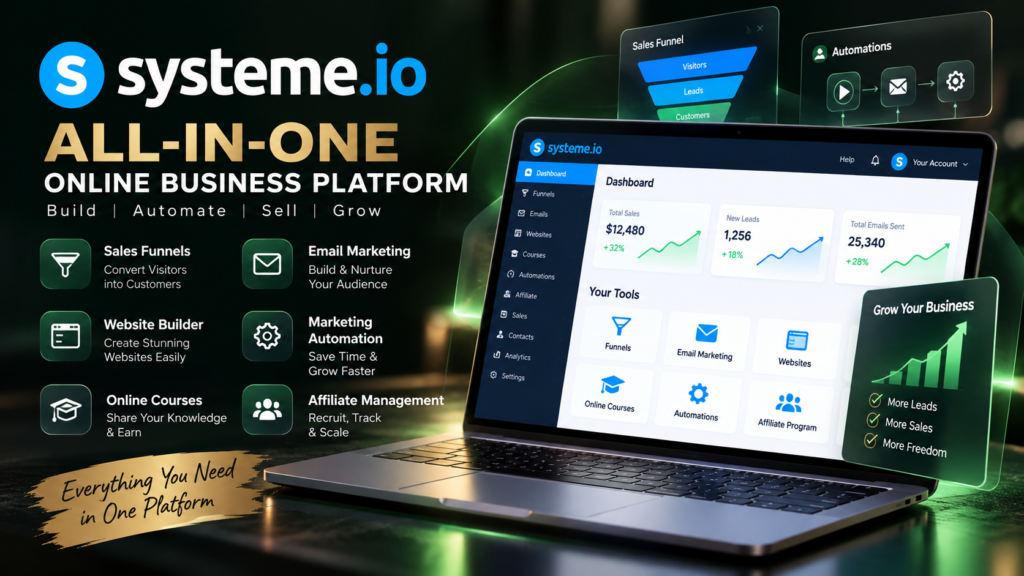
Systeme.io approaches this dilemma from a philosophy of cohesion. Designed as a comprehensive, all-in-one online business platform, it integrates the critical infrastructure required to build, market, and sell from a single command center. Rather than forcing creators and business owners to act as systems engineers, the platform aligns essential commercial capabilities—from customer acquisition funnels to educational product delivery—under a unified architecture.
The Hidden Cost of the Fragmented Tech Stack
To appreciate the structural role an integrated platform plays, one must first examine the operational weight of a disconnected software ecosystem. When entrepreneurs bridge five or six distinct applications, they inadvertently introduce multiple points of failure. An unexpected update on one platform can disrupt automated contact synchronization with another, causing lost leads or abandoned sales journeys. Reconciling transactional data across separate dashboards consumes valuable executive focus that could otherwise be directed toward product creation or strategic marketing.
Furthermore, fragmented data creates blind spots. Understanding how an email subscriber interacts with a specific sales page, completes an educational course, or activates an affiliate relationship becomes an exercise in manual data exporting and analytical guesswork. By contrast, a unified environment maintains continuity across every touchpoint, ensuring that audience interaction flows naturally through each stage of the lifecycle.
Core Infrastructure: Funnels, Websites, and Intelligent Automations
At the center of Systeme.io is a commitment to removing operational friction between discovery and conversion. The platform combines essential web-building capabilities with responsive automation tools, eliminating the barrier between front-facing presentation and back-end logic.
Unified Sales Funnels and Digital Storefronts
Building a digital presence often requires balancing broad brand visibility with focused conversion paths. Within Systeme.io, the ability to build functional websites sits directly alongside targeted sales funnels. While a traditional website serves as the enduring anchor for an organization’s mission and offerings, dedicated funnels guide prospective customers through deliberate, multi-step pathways tailored to specific products or events.
Because the website and the conversion funnels operate within the same core ecosystem, transitioning a visitor from an informational blog post to a high-converting opt-in page or transactional checkout is direct and frictionless. There is no need for third-party embedding scripts or cross-domain tracking configurations.
Fluid Workflow Automations
Automation serves as the nervous system of modern digital commerce. In an integrated architecture, automated rules connect customer actions directly to commercial outcomes without relying on intermediate integration webhooks. With Systeme.io, trigger-based automations allow operators to define precisely what happens when an individual signs up, purchases a digital offer, or engages with content. This seamless trigger-and-action framework empowers independent entrepreneurs to deliver enterprise-grade responsiveness without maintaining complex technical infrastructure.
Audience Nurturing and Monetization: Email, Courses, and Affiliate Systems
Capturing interest is merely the preliminary phase of a sustainable enterprise; the long-term health of an online business depends on relationship nurturing and scalable delivery models. Systeme.io integrates these post-acquisition engines into its shared dashboard.
Cohesive Email Marketing Campaigns
Direct communication remains one of the highest-leverage assets in digital commerce. By housing email campaign functionality within the same platform that captures visitor interest, audience segmentation occurs organically. Rather than managing manual subscriber list imports between distinct databases, email broadcasts and automated nurturing sequences operate directly from unified contact records. This proximity between the contact database, sales history, and engagement activity allows for precise communication without workflow complexity.
Direct Hosting of Online Courses
For modern educators, consultants, and creators, digital curriculum delivery represents a primary commercial vehicle. Rather than requiring users to maintain separate course-hosting portals with independent logins and recurring fees, Systeme.io allows creators to build and publish courses inside the platform. When a customer completes a checkout funnel, access to the learning environment can be granted immediately through internal automations. This cohesive flow minimizes login discrepancies, simplifies customer support, and delivers a clean, professional user experience from the moment of purchase.
Scalable Reach via Integrated Affiliate Management
Word-of-mouth recommendations and partnership marketing often provide the most sustainable distribution channels for independent businesses. Typically, managing an affiliate program requires third-party tracking software, complex cookie management, and manual reconciliation between sales reports and affiliate payouts. With built-in affiliate program capabilities, Systeme.io allows businesses to track referral partnerships directly alongside standard sales funnels and checkout sequences, enabling collaborative growth without software fragmentation.
Strategic Guidance: Identifying the Ideal Use Case
While an integrated suite offers undeniable operational advantages, maximizing its utility depends on aligning the platform’s strengths with organizational objectives. Editorial analysis highlights several operational profiles that benefit substantially from this consolidated design:
- Lean Solo Creators: Independent operators who generate revenue through digital guides, courses, or strategic consultations can manage their public front-end, email list, and delivery mechanisms without spending hours troubleshooting software conflicts.
- Emerging Service Providers: Agencies and independent consultants transitioning into productized offerings can design targeted lead-generation funnels and automate client onboarding sequences effortlessly.
- Digital Course Creators: Educators seeking an unencumbered environment to host video lessons, monitor student progress, and market upcoming enrollments from a singular dashboard.
- Affiliate-Driven Enterprises: Businesses prioritizing referral distribution can establish affiliate links and reward structures directly within their product ecosystem.
Operational Considerations Before Consolidation
Transitioning from a distributed multi-tool setup to an all-in-one environment is a deliberate strategic decision. When planning your implementation, keep the following considerations in mind:
First, evaluate existing data assets. Moving existing email lists, course materials, and custom website layouts into any new environment requires a thoughtful migration schedule. Taking the time to audit audience tags, organize media files, and review automated sequences prior to the transfer will ensure a smooth transition. Second, consider the balance between specialized micro-tools and integrated simplicity. While specialized platforms may offer niche, hyper-customized settings, all-in-one platforms prioritize operational harmony, reliability, and ease of management—a trade-off that often results in significant time savings and reduced cognitive overhead.
Frequently Asked Questions
What does an all-in-one business platform like Systeme.io replace?
Systeme.io consolidates several core business tools that are typically purchased individually, including website builders, sales funnel creators, email marketing and automation software, online course portals, and dedicated affiliate management systems.
Can I build both regular websites and focused sales funnels?
Yes. The platform provides tools to develop comprehensive, multi-page websites alongside targeted, multi-step conversion funnels tailored to specific marketing campaigns or digital products.
How does integrated automation improve business workflows?
Because the automations are native to the platform, actions such as tagging an email contact, unlocking course modules, or issuing affiliate commissions trigger instantly upon purchase or registration without requiring third-party API connectors.
Is the platform suitable for managing an affiliate program?
Yes. Systeme.io includes built-in affiliate program management, allowing business owners to monitor referral traffic, manage partner commissions, and expand distribution directly from their existing dashboard.
The Aurazyra Perspective
Sustainable growth in digital commerce is rarely achieved by accumulating tools; it is achieved through clarity, focus, and operational rhythm. By uniting the vital engines of online enterprise—websites, sales funnels, email marketing, educational courses, automations, and affiliate tracking—Systeme.io provides a clean, dependable blueprint for modern entrepreneurs. For businesses seeking to eliminate technical friction and dedicate their energy to meaningful customer value, embracing an integrated platform represents an intelligent step forward.